Access planned
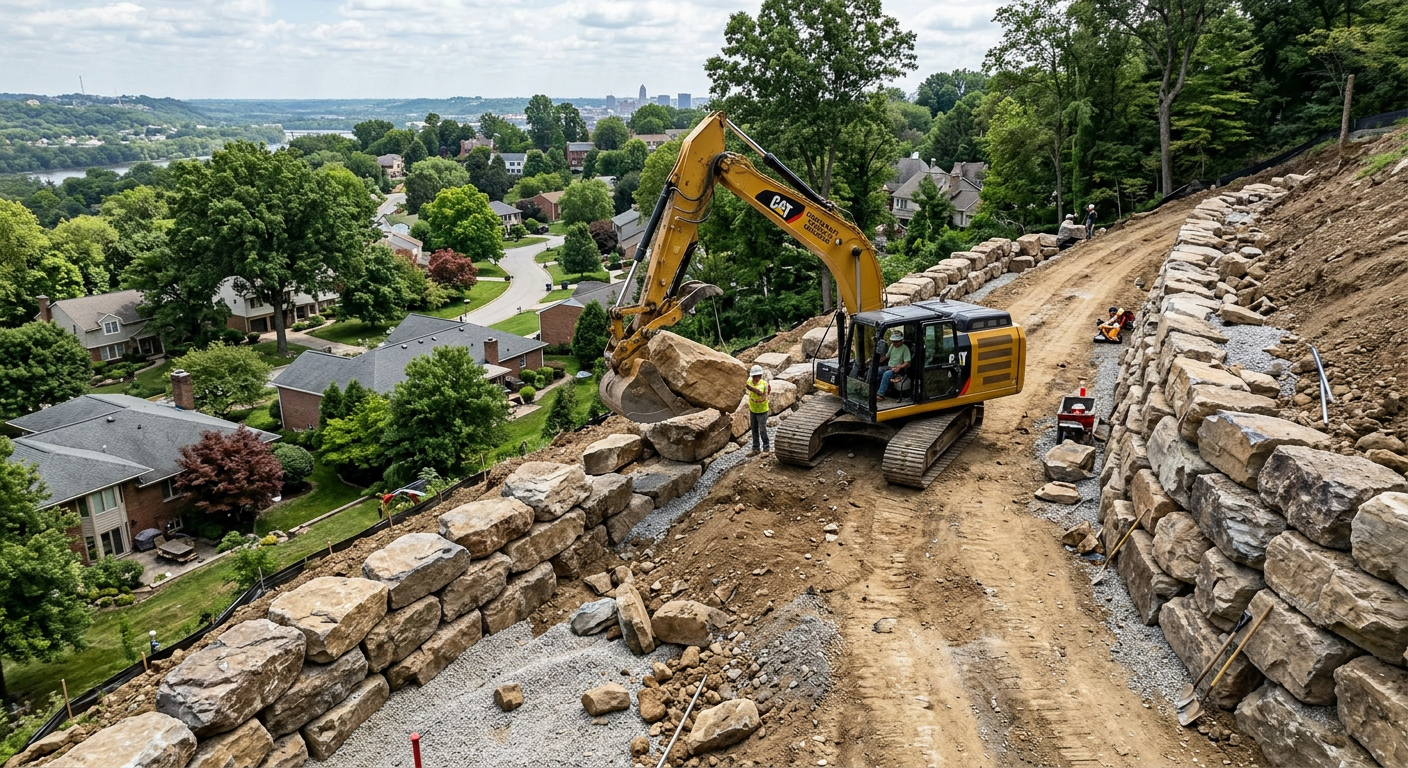
Hillside Eroding Toward Your Home
The slope above or below your house is losing soil with every rain, threatening your foundation or yard.
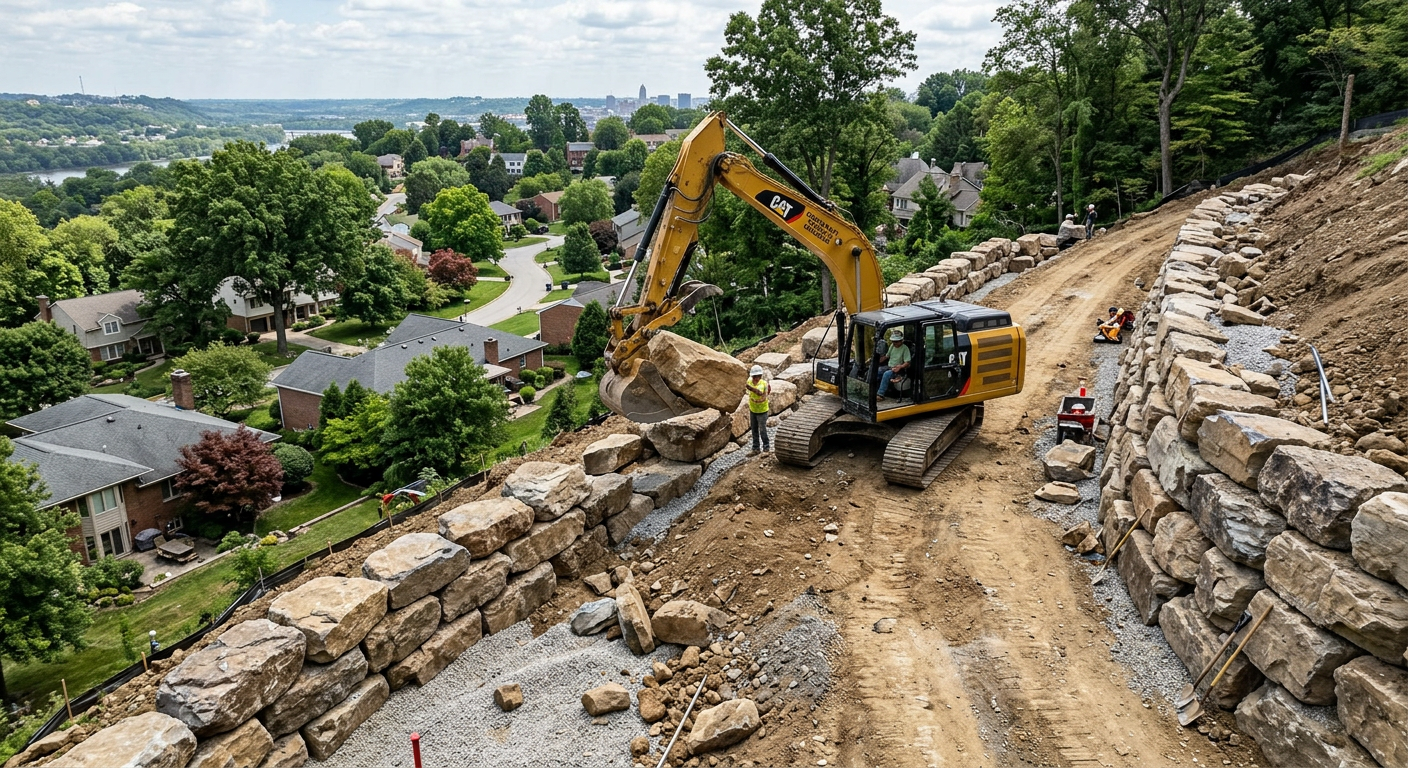
A retaining wall is a drainage system with a face on it.
Boulder, block, and timber retaining walls for hillside properties and slope stabilization.
The Liteworks standard
You get the structure behind the wall, not just blocks stacked in a line.
What goes wrong
Walls fail when contractors skip base prep, geogrid, backfill stone, and water relief behind the wall.
What we leave behind
A wall that holds grade, manages water, and creates usable space without leaning in three years.
Walk the site and find the constraint.
Plan access, water, spoil, and cleanup.
Do the work and leave it ready.
Residential retaining walls paths
Homeowners are not buying “retaining walls.” They are buying a property that works better afterward. We separate the work by outcome so access, water, grade, cleanup, and the next phase are handled before equipment shows up.
The slope above or below your house is losing soil with every rain, threatening your foundation or yard.
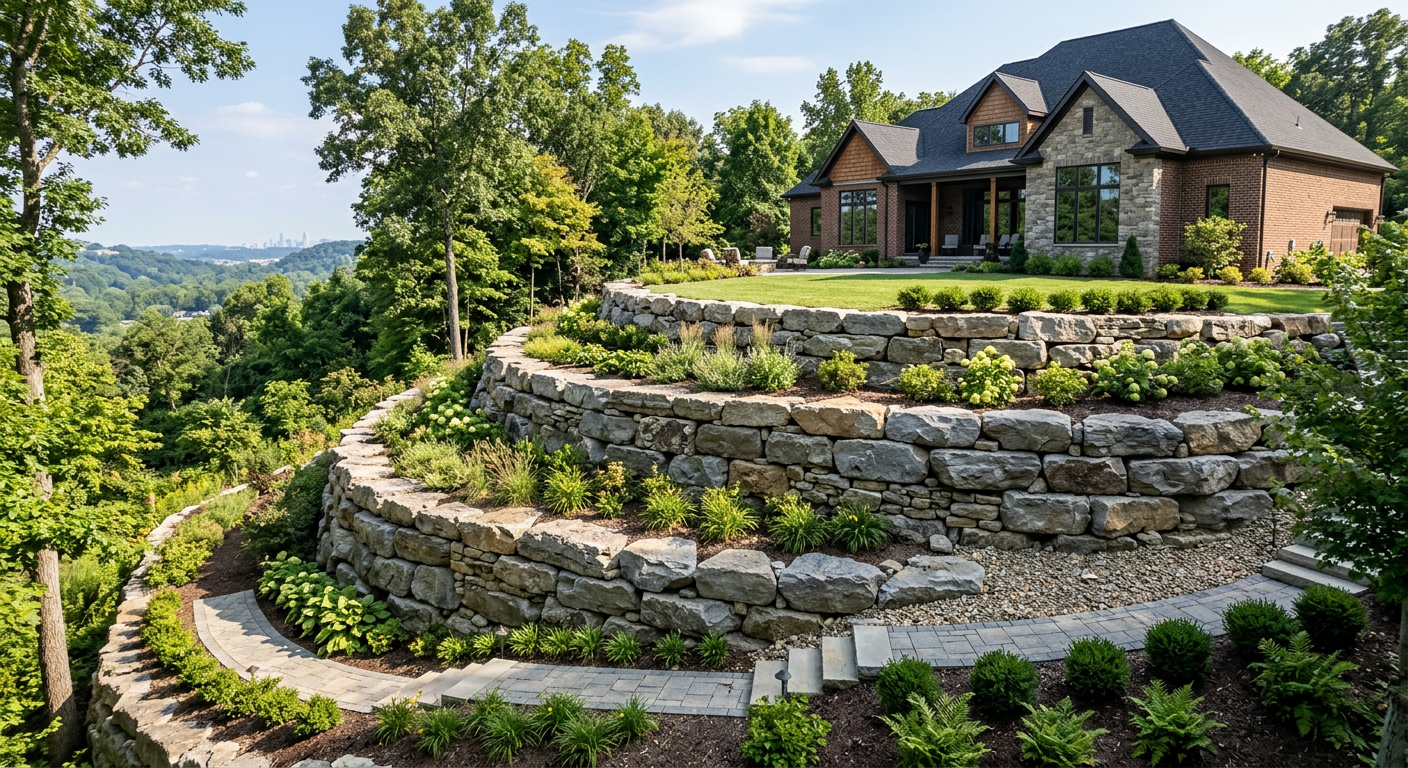
Your sloped lot doesn't have enough flat space — you want to terrace the hillside to create a patio area, play space, or garden.
The ground next to your driveway or walkway is washing out and needs structural support to prevent collapse.
Your existing retaining wall is leaning, cracking, or has already partially collapsed and needs to be rebuilt properly.
The part homeowners do not see
Before work starts, Liteworks is thinking through access, utilities, drainage, materials, cleanup, and how the site gets handed off. That is what keeps a straightforward retaining walls project from becoming an expensive mess.
Site plan
We price the work around the constraints, not a generic menu item.
Before we quote it
The best quote comes from knowing what can go wrong before work starts. For some projects, plans help. For others, photos and a site visit tell the real story. Either way, the goal is a clear scope before equipment shows up.
Here are some common reasons Cincinnati homeowners call us for retaining walls
The slope above or below your house is losing soil with every rain, threatening your foundation or yard.
Your sloped lot doesn't have enough flat space — you want to terrace the hillside to create a patio area, play space, or garden.
The ground next to your driveway or walkway is washing out and needs structural support to prevent collapse.
Your existing retaining wall is leaning, cracking, or has already partially collapsed and needs to be rebuilt properly.
Field proof
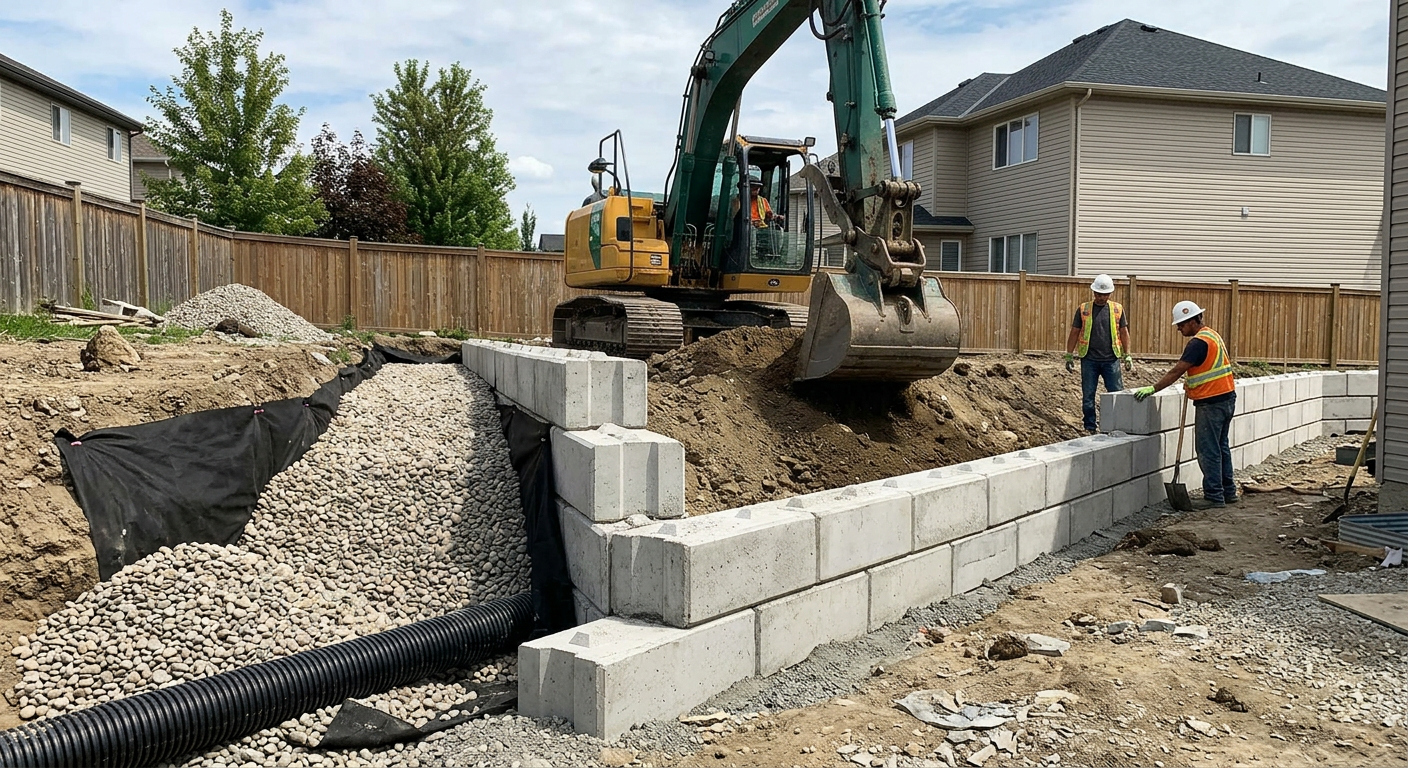
Retaining wall work should show the hidden structure: base, drainage, backfill, alignment, and a slope that finally behaves.
View More Projects → Retaining Walls handled cleanly, controlled, and ready for the next phase.
Retaining Walls handled cleanly, controlled, and ready for the next phase.
Retaining Walls handled cleanly, controlled, and ready for the next phase.
Cincinnati clay, tight yards, real constraints
Cincinnati is built on hills. That's what makes the neighborhoods beautiful — and what makes retaining walls one of the most common residential construction needs in the region. If your yard is losing ground to erosion, your hillside is creeping toward your house, or you want to create usable flat space on a sloped lot, a retaining wall is the answer.
We build retaining walls using natural boulders, segmental concrete block, and timber — depending on your site conditions, aesthetic preferences, and budget. Boulder walls work well for naturalistic settings and can handle significant height with proper engineering. Block walls offer a clean, uniform look and are ideal for walls that need to be perfectly straight or follow precise curves. Timber walls are cost-effective for shorter walls and garden terracing.
The excavation and base preparation behind a retaining wall is where most of the work — and most of the structural integrity — comes from. A wall is only as good as what's behind it. We excavate the hillside, install proper drainage behind the wall (perforated pipe and drainage gravel), compact the base, and build the wall with adequate batter and drainage to handle the lateral earth pressure it'll face. Cincinnati's clay soils exert significant pressure on retaining walls, especially when saturated, so proper drainage behind the wall isn't optional — it's what keeps the wall standing.
For walls over four feet in retained height, Hamilton County and most surrounding municipalities require engineered plans and a building permit. We work with local engineers and can help coordinate the permit process. We've built walls throughout the steep neighborhoods of Mt. Adams, Columbia Tusculum, Anderson Township, and the hillside communities along the Ohio River in Northern Kentucky.
Multi-tier walls are common on Cincinnati's steeper properties. Instead of one tall wall, we build two or three shorter walls with terraced levels between them. This distributes the load, reduces the engineering requirements, creates usable space on each terrace, and often looks better than a single imposing wall. We design the tier spacing and heights based on the specific slope and soil conditions on your property.
Every retaining wall project starts with a site visit where we assess the slope, soil conditions, drainage patterns, and access. We discuss material options, provide a clear quote with no hidden costs, and give you a realistic timeline. Most residential retaining wall projects are completed in three to five days.
Numbers homeowners ask for
3–5 days for most residential retaining walls; larger or multi-tier projects may take 1–2 weeks
$5,000 – $25,000+ depending on wall height, length, material, and site access
Included in clean work
From site walk to clean handoff, the process should feel boring in the best way.
We evaluate the slope, soil, drainage, and access to determine the right wall type, height, and placement.
We excavate into the hillside, prepare a compacted aggregate base, and install the drainage system behind the wall.
We build the wall with proper batter, setback, and drainage — whether natural boulders, concrete block, or timber.
We backfill behind and above the wall, compact the fill, and finish grade the surrounding area.
"Our hillside was sliding toward the neighbor's property. They built a three-tier boulder wall that looks like it's been there forever and completely stopped the erosion. Worth every dollar."
Tom R.
Mt. Lookout, OH — Multi-tier boulder retaining wall
No surprises
The answers that separate clean work from an expensive mess.
Loveland • Milford • Anderson Township • Mason • West Chester • Liberty Township • Lebanon • Indian Hill • Hyde Park • Madeira • Blue Ash • Montgomery • Batavia • Goshen • Bethel • Amelia • Florence, KY • Erlanger, KY • Burlington, KY
Tell us what you are trying to fix, build, remove, or reclaim. We will help you figure out the cleanest way to handle the retaining walls work.
No obligation. No pressure. Just a straight answer.