Liteworks FAQ
Know Before
We Dig.
The expensive mistakes in excavation and sitework usually happen before the machine starts. Here is what to know about pricing, access, utilities, weather, equipment, cleanup, and clean handoff.
Most homeowners are really asking
Will this be done cleanly, safely, and without surprise costs?
Licensed & insured
Professional sitework with the right protection in place.
Greater Cincinnati
Southwest Ohio, Northern Kentucky, and Southeast Indiana.
Clear next step
Quote, site visit, or honest guidance if the job needs more detail.
Getting Started
How the quote process works before equipment shows up.
How do I get a quote for my project? +
Use the quote form, call, or text us at (513) 927-9675. The most useful details are the project address, photos, what needs fixed or built next, and any access or drainage concerns. If the scope is simple, we can often move quickly. If the site needs eyes on it, we will schedule a visit and give you a clear next step.
What should I send before the site visit? +
Send the address, photos or videos of the work area, what you want done, what the site needs to be ready for next, and anything you already know about utilities, wet areas, slopes, fences, gates, septic, or access limits. You do not need perfect information. Rough context is enough to start.
Do you give ballpark prices? +
Sometimes, but only when the scope is clear enough to avoid misleading you. Sitework pricing changes fast based on access, grade, soil, haul-off, disposal, utilities, drainage, and finish condition. We would rather give a useful range or schedule a site visit than throw out a number that falls apart later.
What areas do you serve? +
We serve Greater Cincinnati, including Hamilton, Butler, Warren, and Clermont counties in Ohio, plus Northern Kentucky and Southeast Indiana. If you are near the edge of the service area, send the address and we will tell you straight.
Pricing & Scope
Why one dirt job can cost very differently from another.
How is pricing determined? +
Pricing is based on scope, access, site conditions, machine time, hauling, disposal, materials, finish expectations, and risk. A clean flat lot with easy access is very different from a tight backyard with clay, utilities, slopes, fences, or water problems. Our quote explains what is included so you know what you are actually buying.
Do you require a deposit? +
Most scheduled projects require a deposit, with the balance due at completion or according to the terms in the written estimate. Larger or material-heavy jobs may have different payment milestones. We spell that out before work starts.
What payment methods do you accept? +
We accept common business payment methods including check, card, and bank transfer. Payment terms are included in the estimate so there are no surprises at the end of the job.
What can make a project more expensive than expected? +
The usual culprits are poor access, soft or wet ground, unknown buried material, utility conflicts, bad drainage, steep slopes, haul-off distance, disposal requirements, and scope changes after work begins. We try to identify those risks early so they do not become expensive surprises.
Project Process
What happens from quote to clean handoff.
How long does a typical project take? +
Small residential projects can take one to three days. Larger clearing, drainage, demolition, excavation, or site prep work can take a week or more. Weather, soil conditions, materials, permits, and access all affect timing. We give you a realistic timeline with the quote.
Do you handle permits? +
We can help identify what permits may be needed and point you in the right direction. Permit requirements vary by municipality and project type. Some projects require homeowner, builder, or municipal involvement before work can begin.
What happens if there is bad weather? +
Heavy rain, snow, freeze-thaw, and saturated ground can delay sitework. Working in bad conditions can create rutting, unsafe access, poor compaction, or a worse final result. If weather affects the schedule, we communicate clearly and restart when conditions make sense.
How do you handle underground utilities? +
Before excavation or trenching, utilities must be marked through the proper utility protection process. Utility marking is a non-negotiable safety step, but it does not always locate private lines like irrigation, invisible dog fence, septic laterals, or homeowner-installed utilities. We talk through those risks before work starts.
Equipment & Site Conditions
The right machine matters, but the plan matters more.
What types of equipment do you use? +
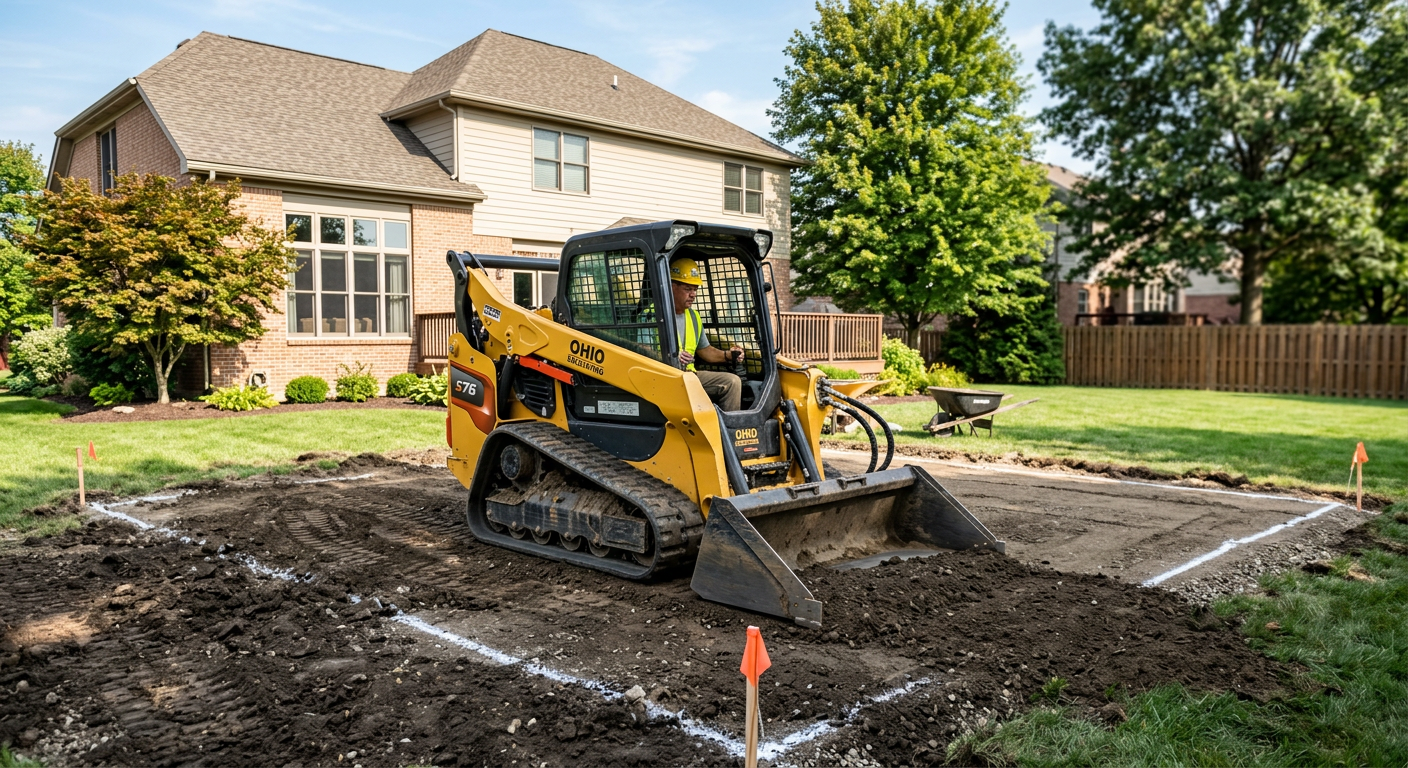
We use professional excavation and sitework equipment such as excavators, skid steers, compact track loaders, forestry mulchers, dump trailers or trucks, and attachments suited to the job. The goal is not always the biggest machine. It is the right machine for the property, access, and finish needed.
Can you work on steep or difficult terrain? +
Yes, within safe operating limits. Track equipment helps with slopes, soft ground, and rough conditions, but every site is different. We evaluate access, rollover risk, soil stability, drainage, nearby structures, and what the machine needs to safely enter and exit.
Can you work in tight residential yards? +
Often, yes. Tight access is common in residential work. Gates, fences, turf, trees, neighboring property, overhead lines, and turning room all matter. If access is tight, we plan the machine choice and route before the job instead of figuring it out after the equipment arrives.
What size trees can you remove or mulch? +
Forestry mulching can handle a lot of brush and smaller trees efficiently. Larger trees may need to be cut, moved, or handled separately depending on size, species, lean, location, and cleanup expectations. We will recommend the right approach after seeing the site.
Cleanup & Handoff
The job is not finished when the machine stops moving.
Do you clean up after the work is done? +
Yes. Cleanup and final condition are part of the job conversation. Depending on the scope, that may mean hauling debris, shaping grade, smoothing disturbed areas, staging material neatly, restoring access routes, or leaving the site ready for the next contractor.
What happens to excavated material or debris? +
It depends on the project. Material may be hauled away, reused as backfill, spread on site, stockpiled for later, or disposed of properly. We discuss that during quoting because haul-off and disposal can materially affect cost.
What does “ready for the next phase” mean? +
It means the work is left in a condition that supports what happens next. That could be a foundation crew, concrete contractor, drainage finish, builder, landscaper, driveway install, or simply a homeowner who needs usable ground again.
Do you stand behind the work? +
Yes. If something does not look right or you have a workmanship concern, call us. Site conditions vary, especially with water and soil, but we would rather have the conversation and make things right than disappear after the invoice.
What we need to know
The quote starts with the constraints.
Tell us the obvious stuff, then tell us what worries you. Wet yard, narrow gate, steep slope, unknown utilities, bad access, tight deadline, neighbor fence, future builder, concrete crew waiting. That context matters.
What will this actually cost?
Will the yard, driveway, or access route get destroyed?
Can equipment fit where the work needs done?
Will drainage, grade, or utilities create a surprise?
What condition will the site be left in?
Have a project-specific question?
Send the site. We will give you the real answer.
Photos, address, rough scope, and what you need the property ready for. That is enough to start.
Free quote. Straight answer. Clean plan.