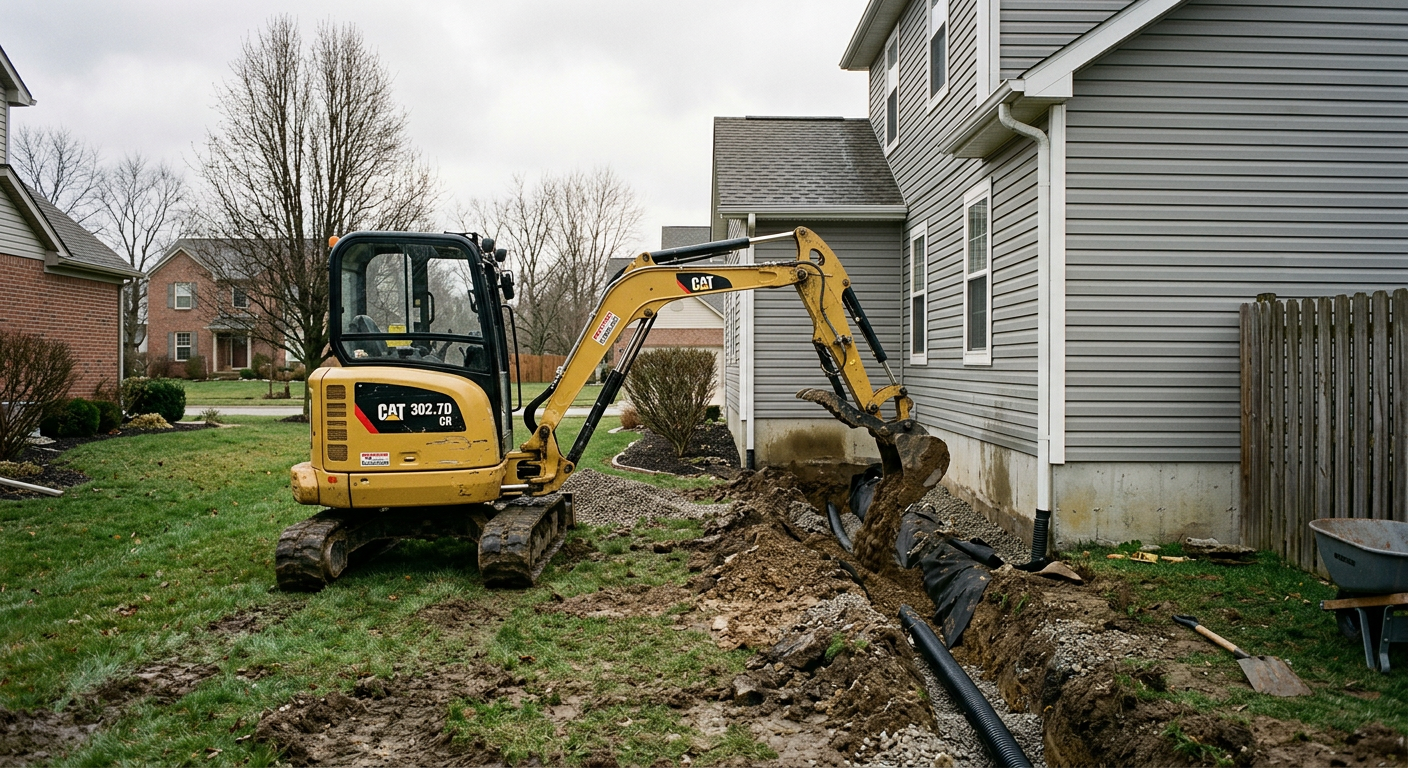
Access planned
Water in Your Basement
Groundwater is seeping through your basement walls or floor after heavy rain — a perimeter French drain may be the solution.
Water problems do not get solved by guessing where to bury pipe.
French drains, yard drainage, and downspout routing to keep water away from your home.
The Liteworks standard
You understand the source of the water before anyone starts digging.
What goes wrong
A French drain without a real outlet, wrong slope, or no grade correction just moves the wet spot somewhere else.
What we leave behind
Water has a path away from the house, out of the yard, and toward a legal outlet.
Walk the site and find the constraint.
Plan access, water, spoil, and cleanup.
Do the work and leave it ready.
Residential drainage paths
Homeowners are not buying “drainage.” They are buying a property that works better afterward. We separate the work by outcome so access, water, grade, cleanup, and the next phase are handled before equipment shows up.
Groundwater is seeping through your basement walls or floor after heavy rain — a perimeter French drain may be the solution.
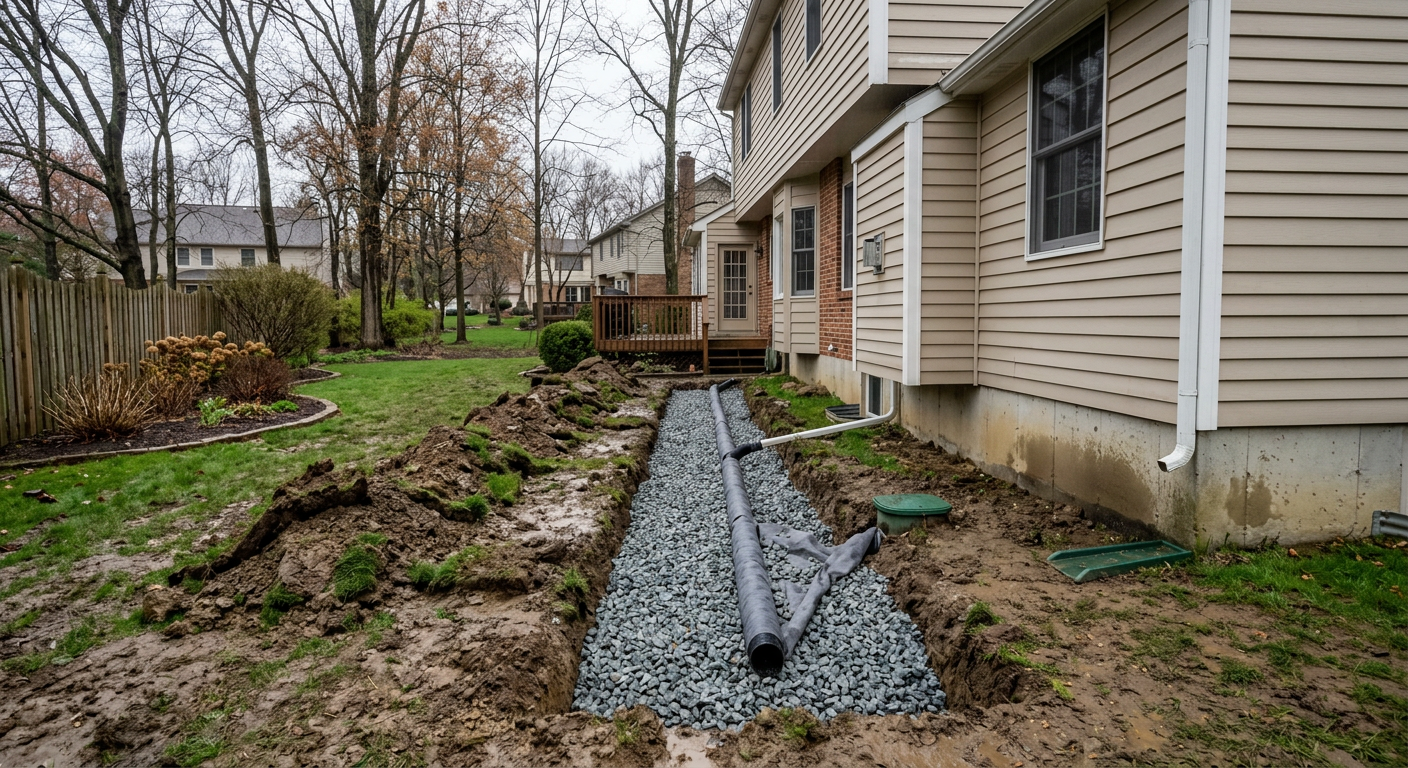
Your backyard stays wet for days after rain, ruining your lawn and making it unusable. Cincinnati clay soils make this a common problem.
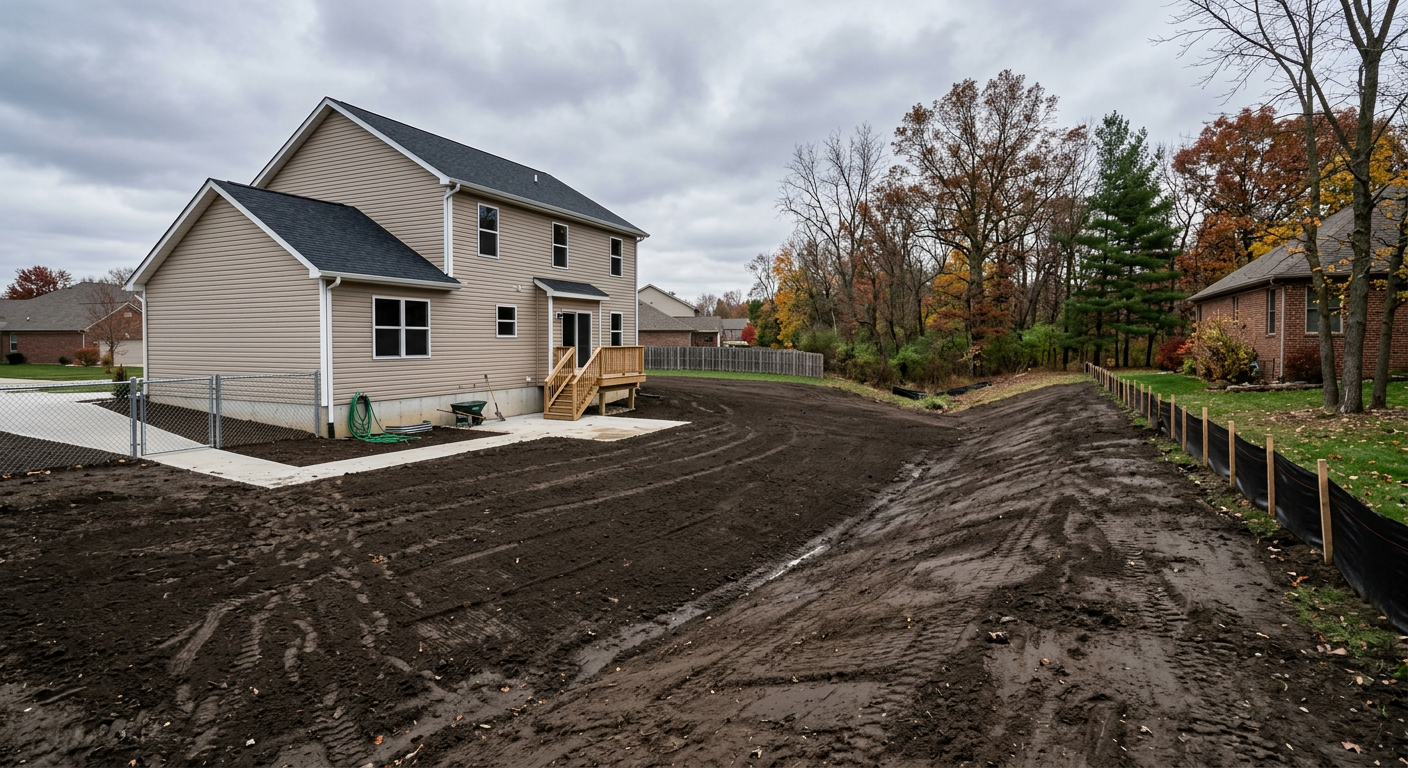
Your yard slopes toward your house instead of away, directing rainwater right to your foundation — a grading correction problem.
Your gutters dump roof water right next to the foundation. Underground downspout routing will move it well away from the house.
The part homeowners do not see
Before work starts, Liteworks is thinking through access, utilities, drainage, materials, cleanup, and how the site gets handed off. That is what keeps a straightforward drainage project from becoming an expensive mess.
Site plan
We price the work around the constraints, not a generic menu item.
Before we quote it
The best quote comes from knowing what can go wrong before work starts. For some projects, plans help. For others, photos and a site visit tell the real story. Either way, the goal is a clear scope before equipment shows up.
Here are some common reasons Cincinnati homeowners call us for drainage
Groundwater is seeping through your basement walls or floor after heavy rain — a perimeter French drain may be the solution.
Your backyard stays wet for days after rain, ruining your lawn and making it unusable. Cincinnati clay soils make this a common problem.
Your yard slopes toward your house instead of away, directing rainwater right to your foundation — a grading correction problem.
Your gutters dump roof water right next to the foundation. Underground downspout routing will move it well away from the house.
Field proof
Drainage work should show a clear water path: correct slope, clean outlets, protected soil, and no mystery wet spots left behind.
View More Projects → Drainage handled cleanly, controlled, and ready for the next phase.
Drainage handled cleanly, controlled, and ready for the next phase.
Drainage handled cleanly, controlled, and ready for the next phase.
Cincinnati clay, tight yards, real constraints
Water in the wrong place is one of the most damaging — and most stressful — problems a homeowner can face. Water seeping into your basement, pooling in your backyard after every rain, eroding your landscaping, or coming too close to your foundation aren't just inconveniences. Left unaddressed, they cause real structural damage, mold, and degraded home value. Liteworks Co. provides residential drainage solutions that fix the actual problem throughout Greater Cincinnati.
We start by diagnosing before we dig. A lot of drainage installations fail because they treat symptoms rather than causes — a French drain in the wrong location, an outlet that doesn't actually drain anywhere, grading that sends water back toward the house. Before we propose any solution, we assess where the water is coming from, why it's pooling, and what path it would take if properly directed.
Greater Cincinnati's heavy clay soils make drainage especially tricky. Clay doesn't drain on its own — water saturates it and stays. This is why so many Greater Cincinnati homes deal with wet basements and soggy yards that take forever to dry after rain. Proper drainage solutions account for the clay: collecting water in permeable gravel and pipe before it saturates the clay, and routing it to outlets that actually drain.
French drains work by intercepting groundwater before it reaches your foundation or saturates your yard. A properly installed French drain — with the right gravel, the right perforated pipe, and most importantly a working outlet that actually takes water somewhere lower — can transform a chronically wet area. The outlet is where most DIY and low-bid French drains fail: a pipe that dead-ends in more clay isn't draining anything. We design outlets that daylight to a lower elevation on the property, connect to storm sewer where available, or discharge to a proper drainage easement.
Freeze-thaw cycles in Greater Cincinnati's climate add another layer of complexity to drainage. Water that pools near your foundation in winter expands when it freezes, exerting pressure on foundation walls and causing cracking and movement over time. Addressing drainage issues before they become freeze-thaw structural problems is significantly cheaper than foundation repair. If you're seeing new cracks in basement walls after a wet winter, water management is almost certainly part of the conversation.
We've solved residential drainage problems in neighborhoods throughout the Greater Cincinnati area — from older homes in Anderson Township and Madeira where downspouts dump roof water right next to foundations, to newer construction in Liberty Township and Mason where grading settled unevenly after construction, to rural properties in Clermont and Warren counties where natural drainage patterns were disrupted by prior development. The causes vary; the fix always starts with an honest assessment.
Numbers homeowners ask for
1–3 days for most residential drainage projects; larger yard systems or complex regrading may take 3–5 days
$2,000 – $10,000 depending on system type, linear footage, and scope of grading corrections
Included in clean work
From site walk to clean handoff, the process should feel boring in the best way.
We walk your property, trace water sources, and understand your drainage problem before proposing solutions.
We design a drainage system that addresses the root cause and works with your property's grading.
We excavate, install drainage components, grade properly, and restore disturbed areas.
We walk through the completed work with you and confirm the system is properly installed.
"After every rain we had water coming into the basement. We'd tried other fixes that didn't work. Liteworks actually walked the yard, figured out where the water was coming from, and installed a French drain with a proper outlet downhill. First heavy rain — dry basement. Should have called them two years ago."
Nancy B.
Anderson Township, OH — Perimeter French drain installation, basement water intrusion
No surprises
The answers that separate clean work from an expensive mess.
Loveland • Milford • Anderson Township • Mason • West Chester • Liberty Township • Lebanon • Indian Hill • Hyde Park • Madeira • Blue Ash • Montgomery • Batavia • Goshen • Bethel • Amelia • Florence, KY • Erlanger, KY • Burlington, KY
Tell us what you are trying to fix, build, remove, or reclaim. We will help you figure out the cleanest way to handle the drainage work.
No obligation. No pressure. Just a straight answer.